


Stove Guards: An Effective Solution for Improving Fire Safety in Student Housing
Student housing is particularly vulnerable to fires, and the kitchen is often where dangerous situations arise. Common causes of fires include carelessness, forgetfulness, cooking under the influence of alcohol, and a lack of cooking experience. Stove guards offer an effective solution for managing these risks and improving fire safety.
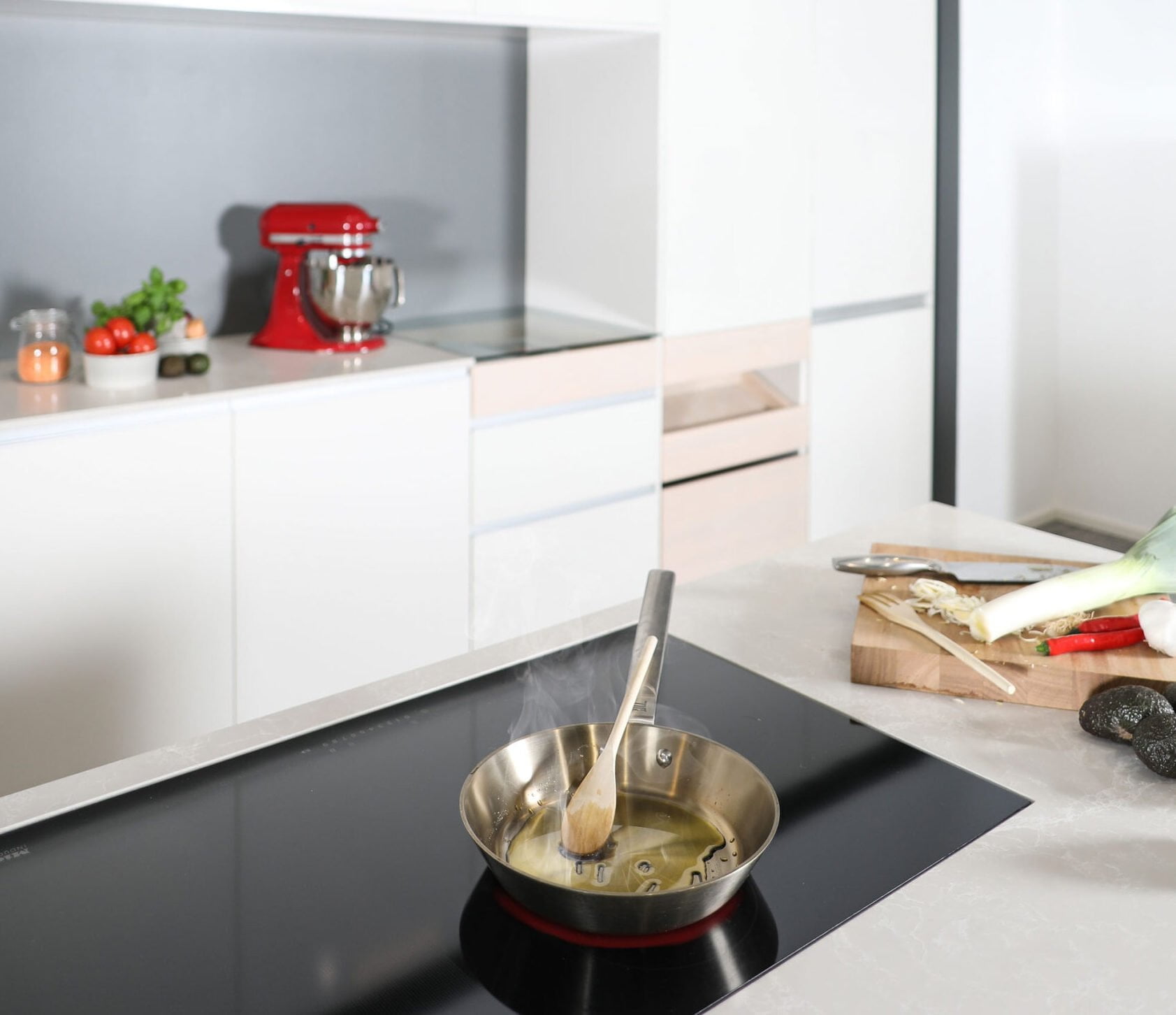
Why Do Fires Start in Student Housing?
There are many reasons why fires start in student housing. Carelessness and forgetfulness are common, as students often focus on other things and forget food cooking in the kitchen. This is especially true in shared apartments, where several students use the same kitchen — food can easily be left on the range stove when the cook steps back into their room for “just a moment.”
Cooking under the influence of alcohol or other substances further increases the risk, as alcohol impairs concentration and judgment. Late-night cooking after a night out—often referred to as a “midnight munchies’ fire” — has led to burnt food situations that ultimately required the fire department to respond. In addition, many students have limited cooking experience, which can lead to mistakes and dangerous situations.
Stove Guards: How Do They Work?
Stove guards are innovative devices that monitor cooking from above the stove and alert users with sound and light if a hazardous situation is detected. If nothing is done and the situation escalates, the Stove Guard automatically cuts the power to the stove.
A stove Guard can detect excessively high temperatures or unusually rapid temperature increases and provides continuous protection that reduces the need for human vigilance and minimizes human error. By preventing fires before they start, stove guards help avoid the costs associated with evacuations and extinguishing efforts, while also saving valuable emergency response time.
NFPA's insight into cooking related fires in student housing
From 2019 – 2023, U.S. fire departments responded to an estimated annual average of 3,231 structure fires in dormitories, fraternities, sororities, and other related properties. These fires caused annual averages of 3 civilian deaths, 19 civilian injuries, and $19 million in direct property damage.
Approximately three out of four fires began in the kitchen or cooking area, accounting for 58 percent of the civilian injuries and 11 percent of the direct property damage. Cooking equipment was involved in nearly 8 out of 10 fires. Unattended equipment was the most common factor contributing to the ignition of these fires.
Source: NFPA Research
Documented Cases of Dorm Fires Caused by Cooking in the United States
Harrisonburg, VA — James Madison University student dies in late‑night cooking fire (Feb 26–27, 2026)
A 28‑year‑old JMU student was found in cardiac arrest after a kitchen cooking fire at an off‑campus apartment; officials ruled the blaze accidental and cooking‑related.
A working smoke detector, which the apartment did have, was not able to save the student in this incident.
Source: Harrisonburg Today / National Today write-up · MSN recap
University of Illinois (Urbana‑Champaign) — Campus report: 6 of 7 unintentional residence‑hall fires were cooking fires (2021–2023)
The university’s annual fire safety report shows seven unintentional fires in residence halls over three years, six of which were caused by cooking (e.g., Orchard Downs, Sherman Hall, Townsend Hall).
Source: CU‑CitizenAccess summary of the university report
Central Methodist University (Fayette, MO) — Unattended cooking causes dorm smoke and evacuation (Apr 22, 2025)
Firefighters responded to a fourth‑floor fire at Woodward Hall after unattended cooking ignited and produced heavy smoke. The dorm was evacuated, but luckily the damage was minimal and no injuries occurred in this case.
Source: The Fayette Advertiser